Showing posts with label hearing loss treatment. Show all posts

Friday, April 18, 2014

Young people gets heart attack too!!!

Hi there saw this article which i think it is essential to share it out to all of you about HEART ATTACK. Written by ANDREA K. WALKER entitled "there is no such thing as being too young to get a heart attack.

Indeed it is so true that we have misconception that HEART ATTACK only occur to obese people.
As more young people suffer from heart attacks, doctors have started to pay better attention to possible symptoms in younger patients and not discount signs because of the person’s age.

Carrie O’Connor thought she was a fairly healthy 35-year-old who went on daily jogs and ate well. Then, more than a year ago, she suffered back-to-back heart attacks.
The first hit while she was treating herself to baubles at Smyth Jewelers in Timonium, Maryland. The project manager at T. Rowe Price suddenly felt nauseated and severe pain consumed her stomach. Pain shot up her arm and her jaw ached. All were common symptoms of a heart attack, the paramedics later told her.

The second happened later that day when doctors tried to insert a stent to open a blocked left artery they believed had caused the first attack. During the procedure, two of her other arteries began to spasm and she had a massive heart attack.
Heart disease is often seen as an older person’s affliction. In the US, the average age at a first heart attack is 64 for men and 72 for women, according to the American Heart Association.
About 10 years ago, the average ages were 65.8 for men and 70.4 for women.
But heart attacks also can occur in younger patients like O’Connor who are seemingly healthy, caught off guard by the life-changing illness. They find themselves dealing with problems more typical of people their parents’ age, taking loads of pills and limiting strenuous activity to protect their weakened hearts.
“It was not something I expected at all,” O’Connor said. “We don’t have family history. I don’t have any typical risk factors. I’m not overweight. I don’t smoke. I eat fine.”
At Anne Arundel Medical Center, where O’Connor received cardiac rehabilitation, the hospital saw such a surge in young patients that it started a support group to help them cope.
In 2009, the average age of heart attack patients at the hospital was 70 years. In 2012, it was 60.
“In addition to the bread-and-butter standard cases, we are seeing it in younger folks and the reasons are not completely clear,” said Dr Scott Katzen, a general and interventional cardiologist with Cardiology Associates who has privileges at Anne Arundel Medical Center. 
In recent years, some high-profile deaths have brought further attention to the issue.
James Gandolfini, who starred in the popular The Sopranos television series, died at age 51 from a massive heart attack. Actor Michael Clarke Duncan died at age 54 after suffering a heart attack. 
Doctors believe some of the attacks are brought on by genetic causes, but doctors also point to the nation’s obesity problem as a factor.
Stress also could play a role, although further study needs to be done, some doctors said.
Doctors have started to pay better attention to possible symptoms in younger patients and not discount signs because of the person’s age, said Jeffrey L. Quartner, chief of cardiology at MedStar Union Memorial Hospital and a board member of the American Heart Association Maryland.
“We have changed our sensitivity to realise young people have heart attacks as well,” Quartner said. 
Ana Pendleton Duhon, a 37-year-old teacher, was riding in the car with her mother in June 2012. That is the last thing she remembers from that day.
Her mother would later tell her she slumped over in mid-conversation. Paramedics shocked Duhon’s heart three times to revive her. Doctors would determine later she went into cardiac arrest. 
(The Star http://www.thestar.com.my/Lifestyle/Health/2014/04/17/There-is-no-such-thing-as-being-too-young-to-get-a-heart-attack/)
Have a blessed and healthy weekend.

HAPPY GOOD FRIDAY & BLESSED EASTER

BEST REGARDS
BEST HEARING AID CENTRE  the Hearing aid provider in Malaysia.

Friday, April 11, 2014

Hearing Health : 5 Things you didn't know about ear wax

So what are the 5 things you didn't know about ear wax?

1. Earwax gets out through the movement of the ear cell. 

The cells inside the ear canal are unique in the human body - they migrate. "You could put an ink dot on the eardrum and watch it move over a few weeks and it would be 'carried out' by the movement of the cells." according to Prof Shakeel Saeed at London's Royal National Throat, Nose and Ear hospital. Read more.....

2.  Earwax has microbial properties


image: BBC Health

Ear wax contains waxy oils but much of it is made up of keratinocytes - dead skin cells. The rest of cerumen - to give it its technical name - is a mixture of substances.

 3. You can differentiate earwax to asian and non asian

Asian and non-Asian ears produce different types of earwax according to scientists at the Monell Institute in Philadelphia. Chromosome 16 is home to the "wet" or "dry" gene for earwax - with the wet variant dominating. READ MORE HERE...

4. A vaccumm is better than a syringed

Carrie Roberts is in her 40s and has an ear wax problem. She had her ears syringed at the GPs several times, tried hot oil with no success - and ended up with both ears blocked.Ms Roberts decided to pay for micro-suction treatment, where the ear canal is cleaned with an instrument like a tiny vacuum cleaner. Prof Saeed prefers this method to syringing. "With syringing you are going in 'blind' - not under direct vision. If you use water it has to get past the wax and come back, bringing the wax with it. Read MORE HERE

5.  Earwax can be a polluntant monitor


Earwax, like many other bodily secretions, can show traces of certain toxins in the body such as heavy metals. But it's an odd place to look and no more reliable than a simple blood test.
There are also some rare metabolic disorders that affect earwax. The most notable earwax scientific discovery of recent times is that of a 24cm wax earplug from a blue whale.
Unlike humans which shed their earwax and dead skin cells, filter-feeding whales retain their earwax, recording life events similar to the way tree rings reveal arid and wet seasons during its lifetime.
The earwax was analysed by Sascha Usenko, a environmental scientist at Baylor University in Waco, Texas. He and his team found that during the 12-year-old male whale's life it came into contact with 16 different pollutants such as pesticides.
There was a peak of exposure during the first year of life - suggesting that these were transferred from its mother either in the womb or through her milk.
Now share this to your friends and family.

Better Hearing, Better Living

Best Hearing Aid Centre
Your hearing aid provider in Malaysia. 

Thursday, April 10, 2014

Tears of joy for hearing for the first time

Hearing Problem
I would add on - Hearing brings people together. 

Does this speak to your heart?

Ever wondered how it feels to hear for the first time?

Take a look at a few videos showing people from all walks of their life hearing for the first time.


First Time Hearing as Teenage Girl


Now what do they feel? Tears of joy..... You know the significant of hearing again or hearing for the first time? Don't give up.

Share this around. Let others know they can hear again or hear for the first time.

At Best Hearing Aid Centre, we care for you because we believe better hearing, better living.

Monday, March 31, 2014

The focus on Hearing Loss and Hearing Aids

Hey there I just found this article on - "Health Break: Session to focus on hearing loss, aids" written by  DR. LESLIE PURCELL  an audiologist with Mount Nittany Physician Group interesting hence I believe everyone can learn from Dr Leslie's article.

Read more here: http://www.centredaily.com/2014/03/31/4111899/health-break-session-to-focus.html?sp=/99/188/220/#storylink=cpy

Read more here: http://www.centredaily.com/2014/03/31/4111899/health-break-session-to-focus.html?sp=/99/188/220/#storylink=cpy

Do you know? 
Hearing loss affects more than 36 million Americans. Although hearing problems are commonly associated with the normal aging process, more than half of all hearing-impaired persons are younger than 65, and 35 percent of those individuals do not utilize devices that can significantly improve hearing. Read more here.....
The number says it all. That is a big group of people affected by hearing loss. From here we learn that the awareness is still not there yet.

What are the common symptoms of hearing loss? 
• Asking others to repeat what they said;• Difficulty understanding conversation in crowded places;• Inability to hear clearly on the phone;• Feeling tired at the end of the day from straining to hear;• The need to stare at people when they’re talking in order to read lips; and• Ringing in the ears.
The causes of hearing loss
Hearing loss can have many causes, including age-related changes, ear infections, congenital defects or trauma. Many people are not sure where they should begin to seek help for their hearing. Read more here...
 Like what Leslie says -
Reaching out to an audiologist is a great first step to take in determining if you have any significant loss. An audiologist is a highly trained physician in their field who can diagnose hearing and balance disorders. Audiologists evaluate patients of all ages. If, after evaluation, there is a medical concern, an audiologist can make the appropriate referral to a physician. 
 Hope this simple article helps you.

Best Hearing Aid Centre 


Read more here: http://www.centredaily.com/2014/03/31/4111899/health-break-session-to-focus.html?sp=/99/188/220/#storylink=cpy


Read more here: http://www.centredaily.com/2014/03/31/4111899/health-break-session-to-focus.html?sp=/99/188/220/#storylink=c

Read more here: http://www.centredaily.com/2014/03/31/4111899/health-break-session-to-focus.html?sp=/99/188/220/#storylink=c

Read more here: http://www.centredaily.com/2014/03/31/4111899/health-break-session-to-focus.html?sp=/99/188/220/#storylink=cpy

Monday, March 24, 2014

What are the types ear diseases?

Yes although we are hearing aid provider,  it is important to understand the different types of diseases that contribute to hearing loss.

What are the types of ear diseases?


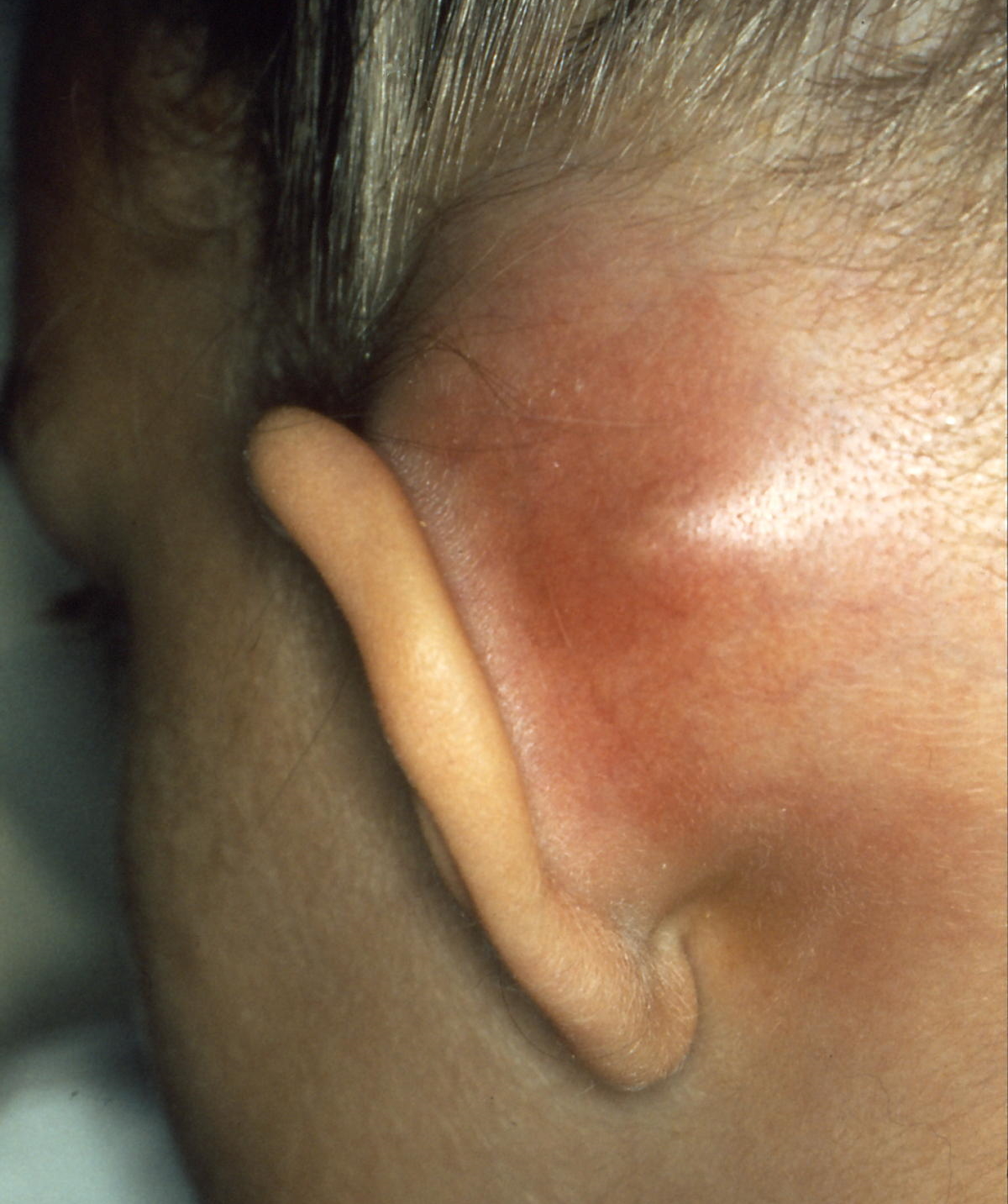
  1. mastoiditis   
  2. barotrauma
  3. labyrinthitis
  4. otosclerosis
  5. ear infection
  6. perichondritis
  7. swimmer's ear
  8. meniere's disease
  9. auditory neuropathy
  10. vestibular neuronit

Pictures of ear diseases

Mastoiditis 
photo credits : Wikipedia 


2. Barotrauma 
med to go 

3. Labyrinthitis


Next week we will cover each ear diseases in a more deeper level.
Should you experience any hearing loss or you encounter any hearing problem, you are most welcome to visit us at our hearing clinics.  

Thank you 


Hearing Aid : Top 10 tips on how to choose hearing aids?

Good Tuesday morning! Perhaps you are looking for hearing aids for your ear. The question is how to choose the correct hearing aid?


Hearing Aid : How to choose hearing aids?


Let us look at Mayo Clinic says about "how to choose hearing aids"

All hearing aids contain the same parts to carry sound from the environment into your ear. However, hearing aids do come in a number of styles, which differ in size and the way they're placed in your ear. Some are small enough to fit inside your ear canal, making them almost invisible. Others fit partially in your ear canal. Generally, the smaller a hearing aid is, the less powerful it is, the shorter its battery life and the more it'll cost.
The following are common hearing aid styles.
Completely in the canal
Completely-in-the-canal hearing aids are molded to fit inside your ear canal and can improve mild to moderate hearing loss in adults.
A completely-in-the-canal hearing aid:
  • Is the least noticeable in the ear
  • Is less likely to pick up wind noise because the ear protects the instrument
  • Is easy to use with the telephone in most cases
  • Uses smaller batteries, which typically don't last as long as larger batteries
  • Doesn't contain extra features, such as volume control or directional microphones
In the canal
An in-the-canal hearing aid is custom molded and fits partly in the ear canal, but not as deeply as the completely-in-the-canal aid. This hearing aid can improve mild to moderate hearing loss in adults.
An in-the-canal hearing aid:
  • Is less visible in the ear
  • Is easy to use with the telephone
  • Includes features that won't fit on completely-in-the-canal aids, but the small size can make the features difficult to adjust
  • May not fit well in smaller ears
Half-shell
A smaller version of the in-the-canal hearing aid, the half-shell is custom molded and fills the lower portion of the bowl-shaped area of your outer ear. This style is appropriate for mild to moderately severe hearing loss.
A half-shell hearing aid:
  • Is bigger than an in-the-canal hearing aid
  • Is a little easier to handle than are the smaller hearing aids
  • Includes additional features, such as directional microphones and volume control
  • Fits most ears
In the ear (full-shell)
An in-the-ear (full-shell) hearing aid is custom made and fills most of the bowl-shaped area of your outer ear. This style is helpful for people with mild to severe hearing loss.
An in-the-ear (full-shell) hearing aid:
  • Is more visible to others
  • May pick up wind noise
  • Contains helpful features, such as volume control, that are easier to adjust
  • Is generally easier to insert into the ear
  • Uses larger batteries, which typically last longer and are easier to handle
Behind the ear
Behind-the-ear hearing aids hook over the top of your ear and rest behind the ear. The hearing aid picks up sound, amplifies it and carries the amplified sound to an ear mold that fits inside your ear canal. This type of aid is appropriate for almost all types of hearing loss and for people of all ages.
A behind-the-ear hearing aid:
  • Is the largest, most visible type of hearing aid, though some new versions are smaller, streamlined and barely visible
  • Is capable of more amplification than are other hearing aid styles
Open fit
These are usually very small behind-the-ear-style devices, although larger behind-the-ear devices can be modified for a more "open" fit. Sound travels from the instrument through a small tube or wire to a tiny dome or speaker in the ear canal. These aids leave the ear canal open, so they're best for mild to moderate high-frequency losses where low-frequency hearing is still normal or near normal.
An open-fit hearing aid:
  • Is less visible
  • Doesn't plug the ear like the small in-the-canal hearing aids do
  • May use very small batteries
  • Often lacks manual adjustments due to the small size READ MORE HERE.....
Lets us also learn from
AARP - a nonprofit, nonpartisan organization, with a membership of more than 37 million, that helps people turn their goals and dreams into real possibilities, strengthens communities and fights for the issues that matter most to families such as healthcare, employment security and retirement planning.

How to Get the Right Hearing Aid' 10 tips we learn from AAR


  1. Don't go it alone.
  2. Interview a provider.
  3. Know before you go.
  4. Have your hearing tested
  5. Try before you buy.
  6. Ask about add-ons
  7. Can you hear me now?
  8. Get it in writing.
  9. Ask about training.
  10. Pay the piper.


If you are interested to look for hearing aids, you are most welcome to connect with us here....

Best Hearing Aid Centre
Hearing Aid Malaysia - Bringing you hearing aids and hearing loss treatment. 

Monday, March 3, 2014

What are the hearing solutions available?


hearing solutions malaysia

We talk about the symptoms of hearing loss on our last post, today we will be looking at what are the various hearing solutions today.

What are the various hearing solutions near you? 

Let's look at WebMD on hearing loss treatment

Treatment for temporary or reversible hearing loss usually depends on the cause of the hearing loss. Treatment for permanent hearing loss includes using hearing devices or hearing implants.
Although you and your family may view permanent hearing loss as part of aging, proper treatment is important. Hearing loss may contribute to loneliness,depression, and loss of independence. Treatment cannot bring back your hearing, but it can make communication, social interaction, and work and daily activities easier and more enjoyable.
Treatment for reversible hearing loss depends on its cause. It is often treated successfully. Hearing loss caused by:
So treatment for temporary hearing loss is on a case to case basis.

What about permanent hearing loss solutions? 


In permanent hearing loss, such as age-related and noise-induced hearing loss, hearing devices can often improve how well you hear and communicate. These devices include:
  • Hearing aids. Hearing aids make sounds louder (amplify). They do not restore your hearing, but they may help you function and communicate more easily. See a picture of the different types of hearing aids camera. Having occasional hearing testscan help you know when your hearing aids needs adjustment.
 Hearing Loss: Should I Get Hearing Aids?
  • Implanted hearing devices, such as a cochlear implant. Several types of hearing implants are available, each for specific types of hearing problems. Some implants require devices to be worn outside the ear. Newer implants are contained within the ear.
  • Assistive listening devices, alerting devices, and other communication aids  
So now even if you have permanent hearing loss there is still help available which is hearing aid.

Like what WebMD states above, hearing aids makes sounds louder in other hearing are so called ampliflier that help make sound louder in your ear.

What are the various types of hearing aids? 


  1. Behind the ear hearing aid
  2. Receiver in Cannal hearing aid
  3. In the ear hearing aid
  4. In the cannal hearing aid
  5. Completely In Cannal  hearing aid 
  6. Invisible In Cannal hearing aid


A recap on what we have learn today from WebMD

Temporary Hearing loss treatment is on a case to case basis.
Permanent hearing loss treatment requires a person to wear hearing aid.

Thank you for reading

BEST HEARING AID CENTRE MALAYSIA
For a list of hearing aids, you are most welcome to CLICK HERE. 


Sunday, February 23, 2014

What causes Hearing Loss?

3 Types of hearing loss 

We learn previously hearing loss can be divided into 3 types : 

     1. Conductive Hearing Loss
     2. Sensorineural hearing loss
     3. Mixed hearing loss

After knowing the different types of hearing loss now let us look at the cause of hearing loss. 

What causes hearing loss? 

 1. Conductive Hearing Loss

Recap again, conductive hearing is the damage of the outer ear like the eardrum. 

This is caused by any blockage that prevents sound reaching the inner ear. This might include:
  • A build-up of earwax
  • Fluid in the middle ear
  • Unusual bone growth in the middle ear
  • Middle ear infections
  • Small holes in the eardrum
Conductive hearing loss is not necessarily permanent and can often be corrected medically or surgically. Read more here.....

2. Sensorineural hearing loss

This is the most common type of hearing loss. Sensorineural hearing loss is caused by damage to the tiny hair cells in the ear that help transmit sound to your brain. These can bend or break due to:
  • Exposure to very loud noises
  • Genetic disposition
  • Virus infections in the inner ear
  • Certain medical treatments such as chemotherapy and radiation
  • Head injury
  • Age
The effects are almost always the same – it becomes harder to distinguish speech from noise, certain high-pitched sounds such as birdsong disappear altogether, people seem to be mumbling and you often have to ask them to repeat themselves.

Sensorineural hearing loss is permanent and can’t be corrected medically, but a hearing aid can almost always help. Read more here....
 Let us now watch a meaningful video : Deaf Boy hears Father's voice for the first time. 


Best Hearing Aid Centre 
"Better Hearing, Better Living"
For a list of hearing aid, Click HERE to find out more.
Check out our hearing loss treatment here.

What is Hearing Loss?

What is hearing loss?


hahahaha Looks like Grandma has hearing problem or hearing loss.

Let us look what really is Hearing loss today.

We will be covering on the types of hearing loss and the degree of hearing loss.

Types of Hearing Loss 

1. Conductive hearing loss
2. Sensorineural hearing loss
3. Mixed hearing loss

Conductive hearing loss

American Speech language Hearing Association defines conductive hearing loss as -  Conductive hearing loss occurs when sound is not conducted efficiently through the outer earcanal to the eardrum and the tiny bones (ossicles) of the middle ear. Conductive hearing loss usually involves a reduction in sound level or the ability to hear faint sounds. This type of hearing loss can often be corrected medically or surgically.

Take a look at the video that explains conductive hearing loss.


Sensorineural hearing loss

Conductive hearing loss is about the outer ear, sensorineural hearing loss in the damage of the inner ear,  or to the nerve pathways from the inner ear to the brain. Can this be treated? 

The answer is no.

Sensorineural hearing loss (SNHL) occurs when there is damage to the inner ear (cochlea), or to the nerve pathways from the inner ear to the brain. Most of the time, SNHL cannot be medically or surgically corrected. This is the most common type of permanent hearing loss. 


Mixed hearing loss

What are mixed hearing loss? 

It is the combination of sensineural hearing loss and conductive hearing loss. 

Check this video out that explains about mixed hearing loss. 


Degree of hearing loss 

How severe can a hearing loss be? Check out the table below for the various degree of hearing loss.

Degree of hearing lossHearing loss range (dB HL)
Normal–10 to 15
Slight16 to 25
Mild26 to 40
Moderate41 to 55
Moderately severe56 to 70
Severe71 to 90
Profound91+
Source: Clark, J. G. (1981). Uses and abuses of hearing loss classification.Asha, 23, 493–500. 
American Speech Language Association 

Hope this help us understand more about hearing loss today.

Let us all recap - hearing loss can be divided into 3 types - conductive hearing loss, sensorineural hearing loss and a mixed hearing loss. 

A simple way to  differentiate conductive hearing loss and sensorineutral hearing loss is the damage of hearing. Conductive hearing loss is the damage of outer ear and sensorineural hearing loss it the damage of inner where most of the time it is permanently hearing loss. A mixed hearing loss is the combination of both conductive hearing loss and sensorineural hearing loss. 

If you are interested to know more about hearing loss and seeking for a treatment?

All you need to do is CLICK HERE and find more. 


"BETTER HEARING, BETTER LIVING